Any agency can send you more traffic. Almost none can fix the checkout that stalls on a $4,000 order, the booking flow that drops on step two, or the dispatch board still living in a group chat. We run both sides — so the growth you pay for actually reaches the bank.
That number belongs to a client who used to run scheduling on a whiteboard and a group chat. Nothing about their marketing changed first. We changed what happened after the click — and the same three leaks show up in almost every business we audit.
Show me the three leaks →Every one of these costs you money today. None of them get fixed by raising the ad budget.
A $4,000 sauna is not a t-shirt. No freight estimate, no financing line, no room-size help, no way to talk to a human — so the buyer closes the tab and calls a competitor who picks up.
Double-booked crews, a no-show nobody logged, a customer who has to phone in to reschedule. Every one of those is a refund, a bad review, or a customer who never rebooks.
The agency says the site is broken. The developer says the traffic is junk. You pay both to argue, and the fix sits in a ticket queue for six weeks.
Last-click dashboards say everything worked. The bank says otherwise. Without revenue-level attribution you scale the wrong channel and starve the right one.
One team owns the whole path. The people writing your ads sit next to the people who ship your checkout, your booking flow, your dispatch board and your payout ledger. When a step leaks, it gets fixed this sprint — not next quarter, and not after a vendor argument.
That's the entire difference. It's also why our clients stop buying "more traffic" and start buying throughput.
Book a strategy callStorefronts built for high-ticket: configurators, freight estimates, financing, expert-chat handoff.
Booking, matching, dispatch and routing that assigns the job without a human touching it.
Invoicing, escrow, provider payouts and a real ledger — money reconciled, not guessed.
Attribution tied to revenue, so the next dollar goes where the last one worked.
E-commerce, marketplaces and the operations that keep them honest — built by the same team running your campaigns.

High-ticket buyers don’t impulse-buy. They size the room, price the freight, compare the heater and want a human before they commit. We build the storefront that answers all four on the product page — instead of losing the sale to a phone call the buyer never makes.
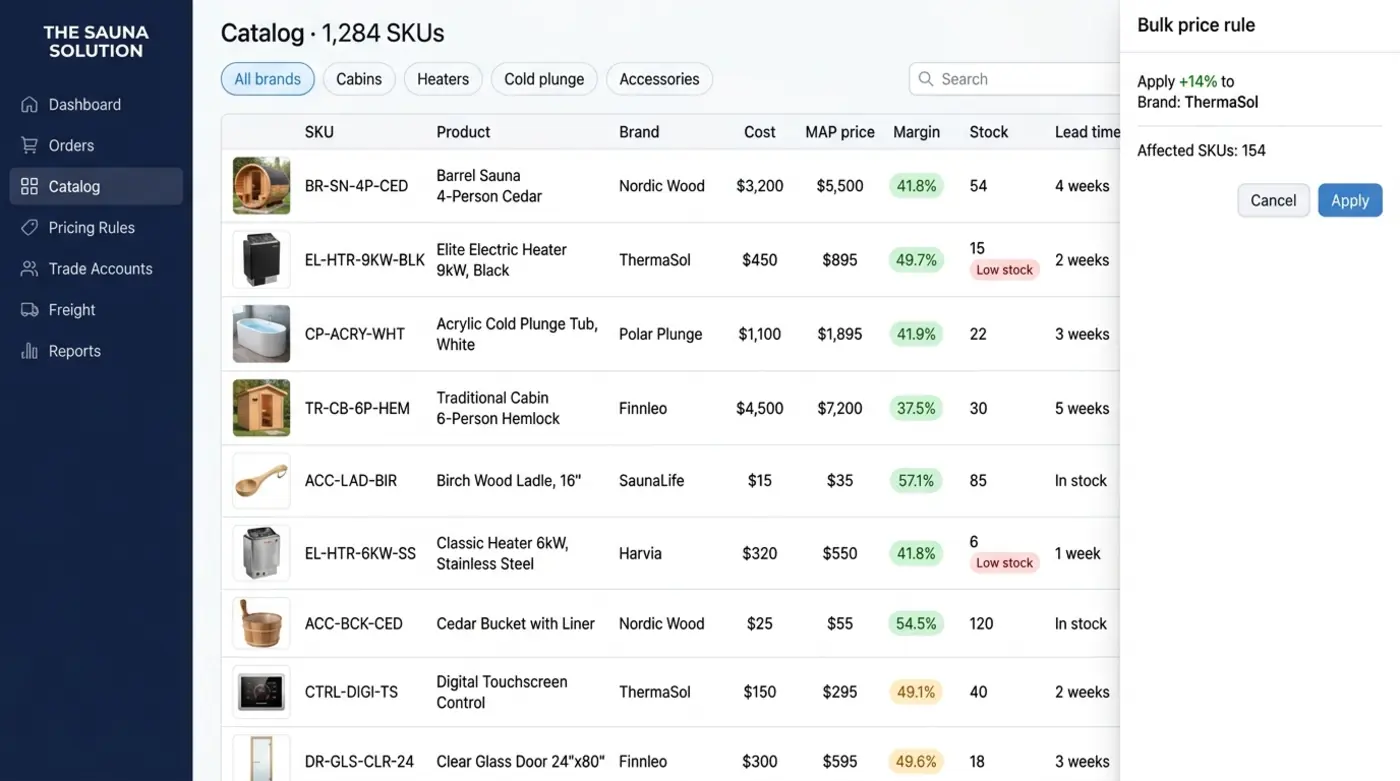
A thousand-plus SKUs across a dozen brands, each with its own MAP rules, cost changes and lead times. Doing that by hand is how margin quietly disappears. We build the rules engine that holds the line automatically and flags what’s about to run dry.
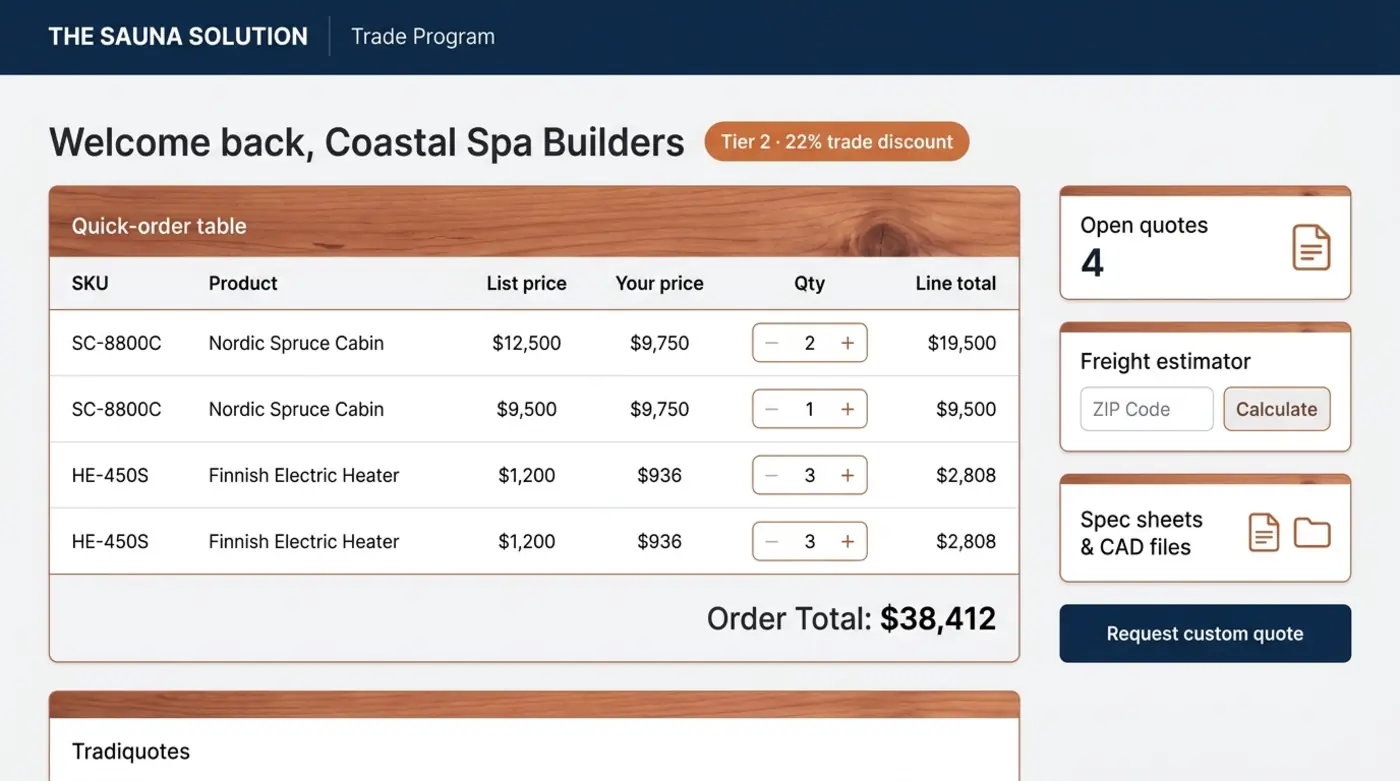
Builders, spas and contractors buy differently from consumers — tiered pricing, quotes, spec sheets, freight to a job site. Give them a self-serve portal and you unlock repeat wholesale volume without adding a single salesperson.
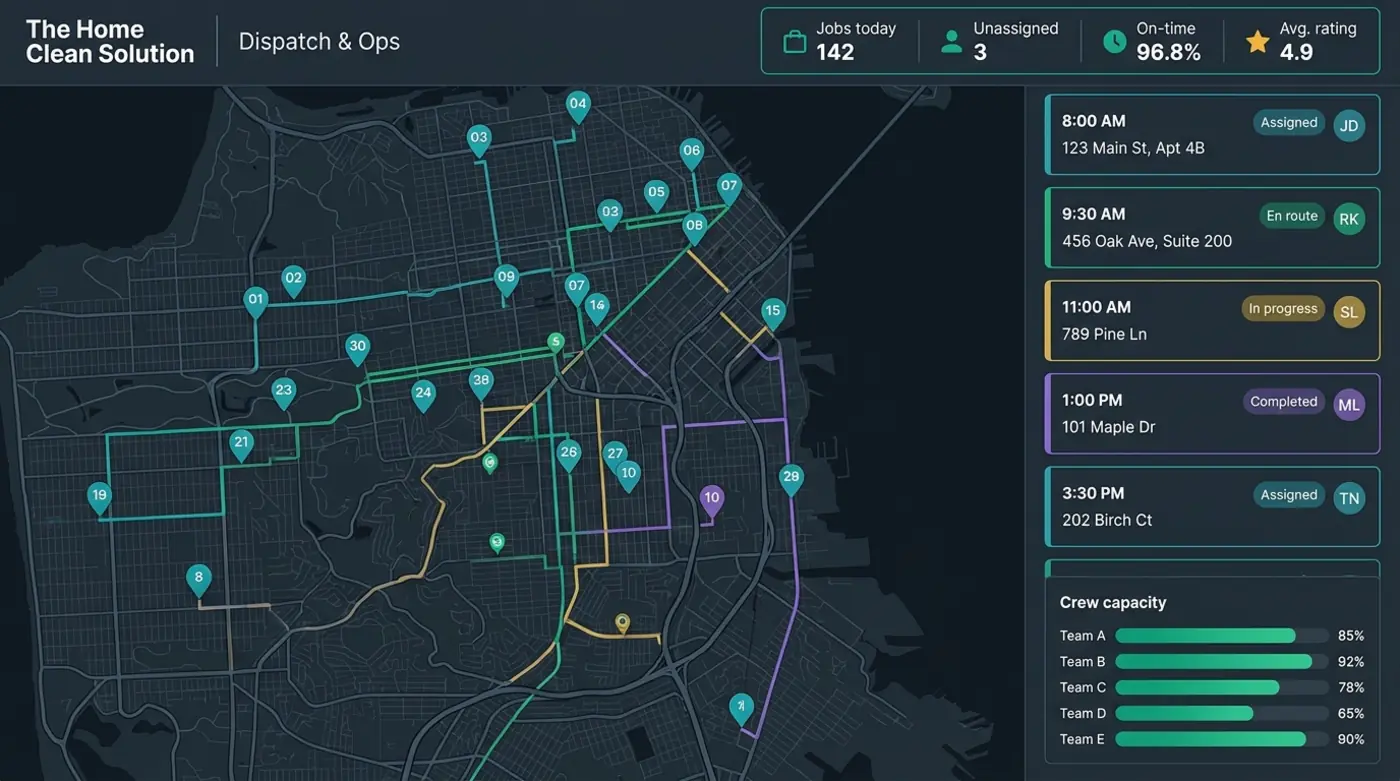
The moment a booking lands, the system matches the right pro, checks capacity, routes the day and tells the customer who’s coming. Your ops lead stops playing air-traffic control and starts managing exceptions only.
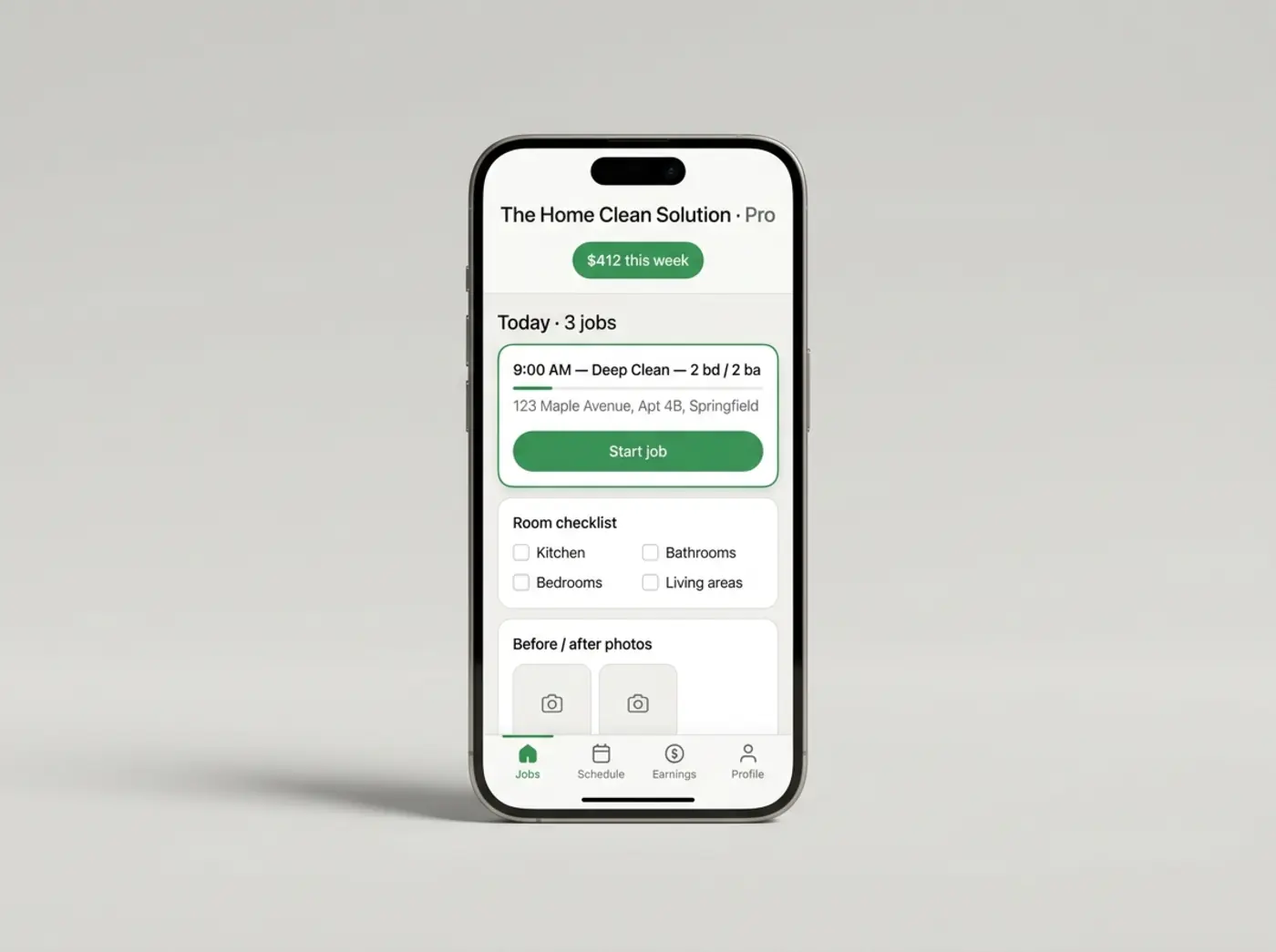
Your people in the field get their day, their checklist and their earnings in one screen — and every job closes with photo proof. Disputes stop being a debate and start being a lookup.
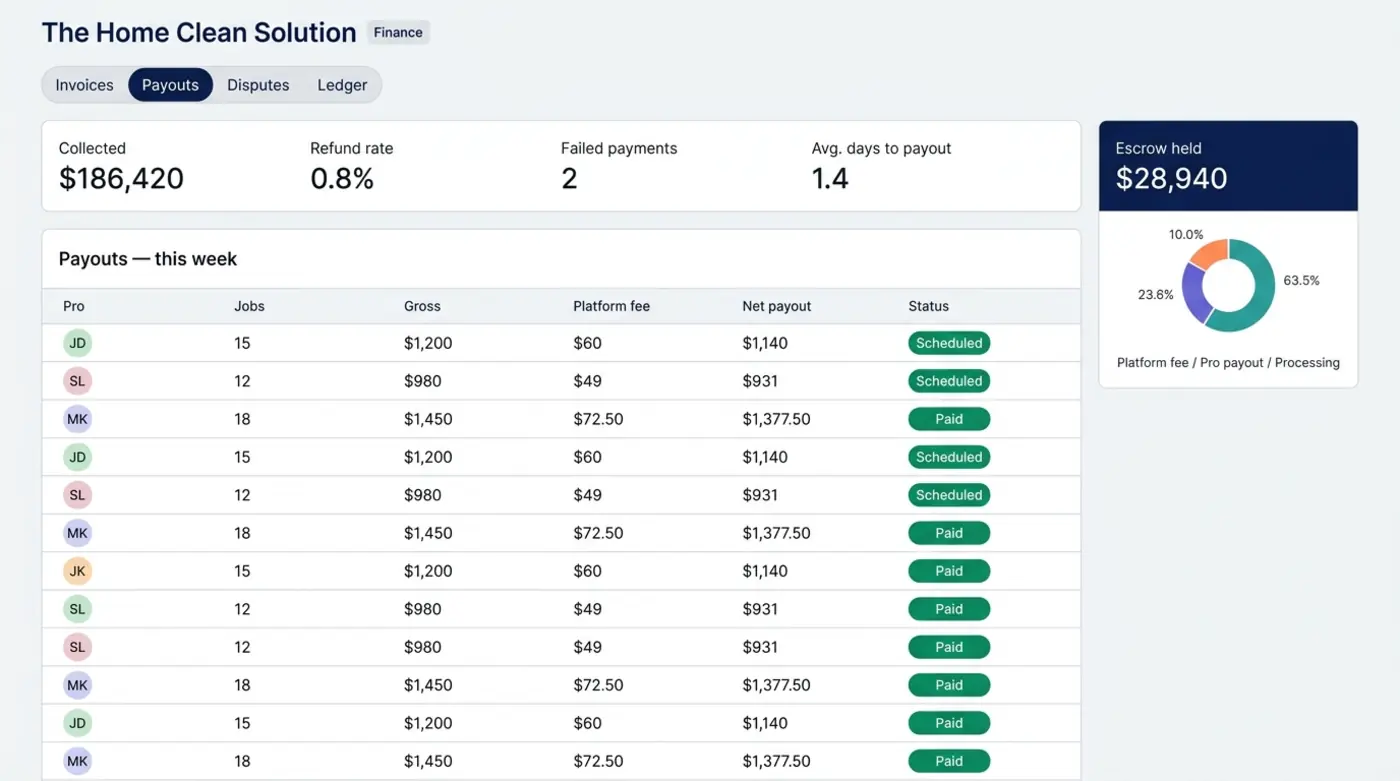
Collect from the customer, hold in escrow, take the platform fee, pay the provider, post it all to a real ledger. Most builds bolt this on last and bleed for years. We build it in from day one.
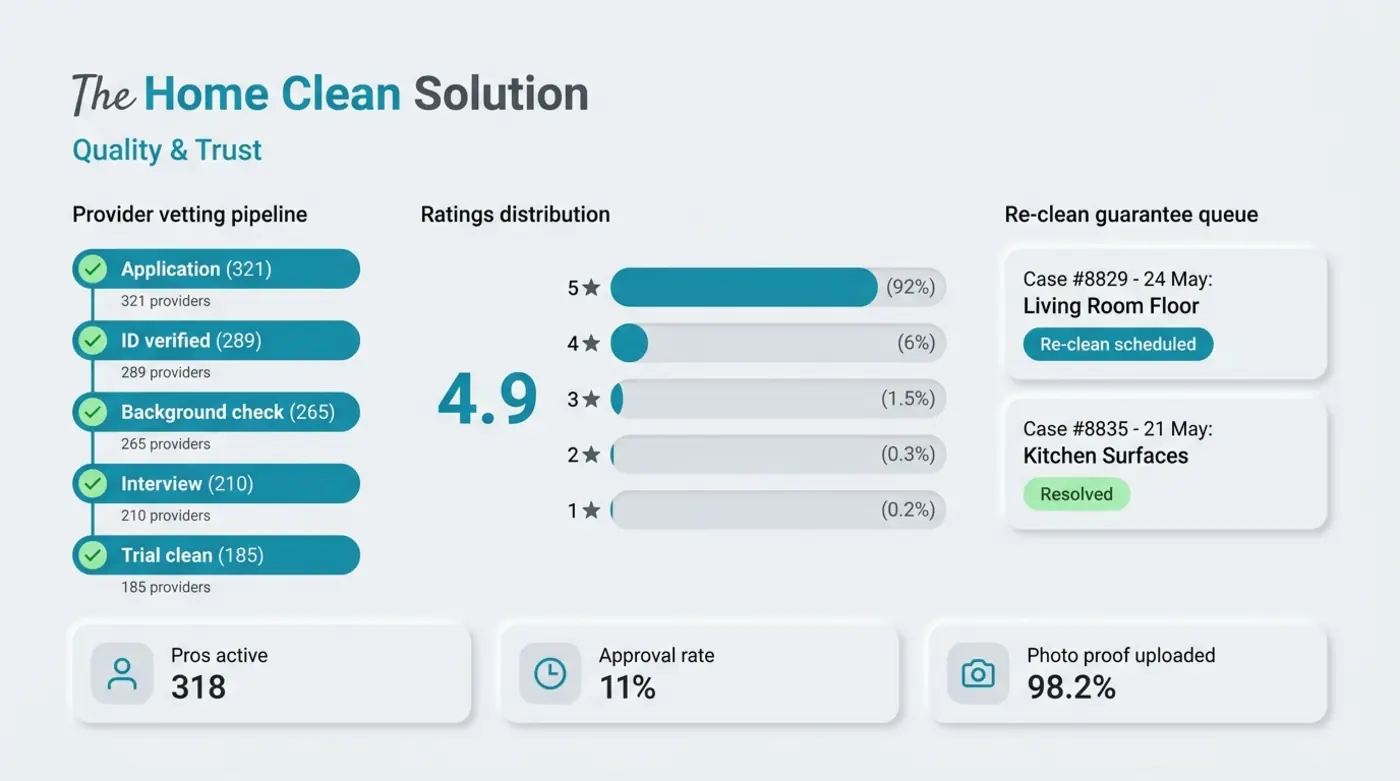
In a marketplace, one bad provider costs more than ten good ones earn. We build the screening funnel, the ratings loop and the guarantee queue that keep quality from drifting as you scale.
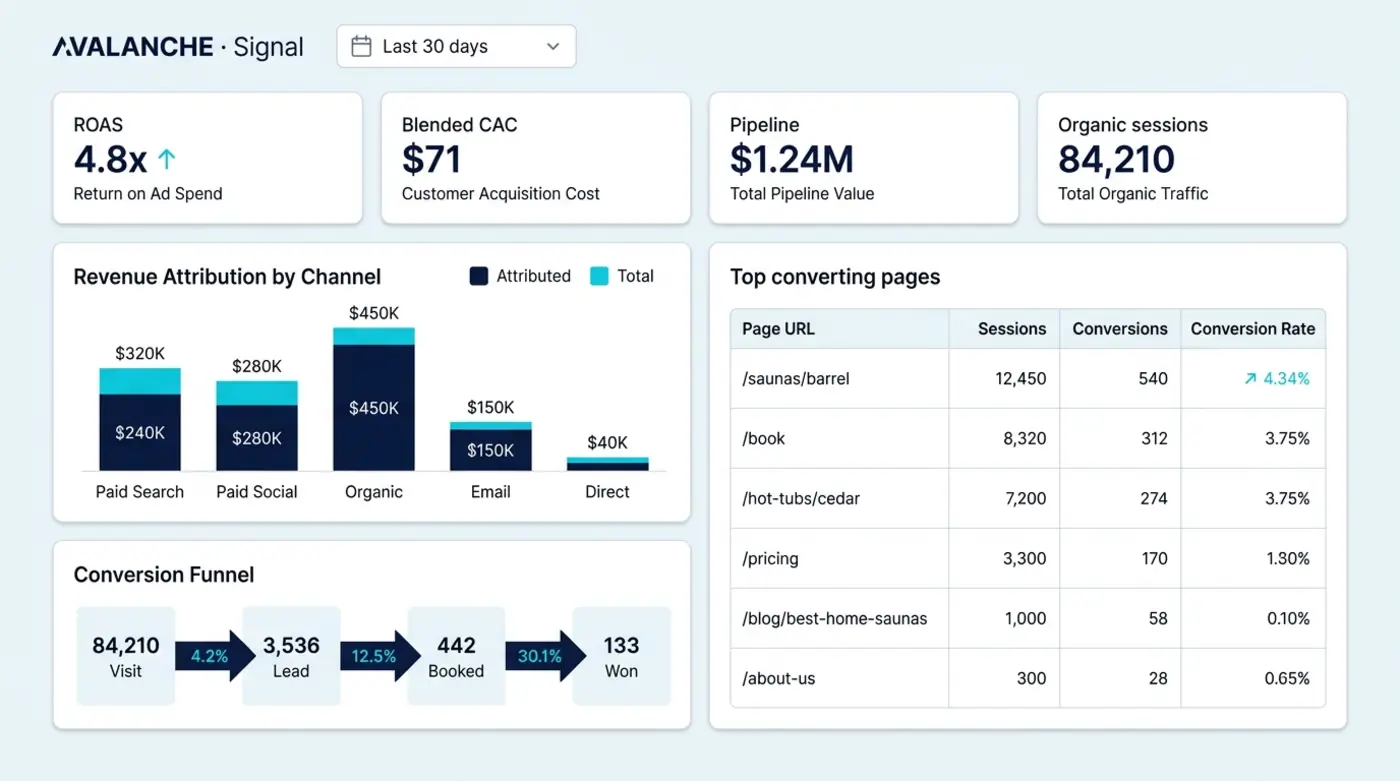
Ad platforms grade their own homework. We wire tracking from first touch to settled revenue, so you can see which campaign produced money — not which one produced clicks.
A high-ticket e-commerce catalog and a two-sided services marketplace — different industries, the same bottleneck: everything that happens after the click.
A 1,000+-SKU high-ticket catalog with freight, MAP rules and a trade channel — merchandised so the product page can close the sale on its own.
Read the build →A 48-table marketplace: book in 60 seconds, auto-dispatch, field app, escrow payouts and a real ledger — customers, pros and staff in one system.
Read the build →Strategy is only half the ad. Our studio produces the visuals, the hooks and the copy — here's a sample of concept campaigns across the industries we serve.






Concept campaigns produced by our creative studio to show the standard we ship — names and brands are illustrative.
Websites, custom software, AI automation, managed IT, cloud and cybersecurity, with starting prices you can see before you call. Six divisions, five fixed-price packages, fifteen industry offers, each on its own page.
Take the whole path or the piece that's bleeding. Either way it's the same team, and the same accountability.
Google, Meta, TikTok & YouTube engineered for ROAS — full-funnel, creative-led, profitably scaled.
Technical SEO and content that earns durable, compounding organic demand.
High-converting sites and landing pages, continuously tested against revenue — not bounce rate.
Storefronts, configurators, freight and checkout work for catalogs where the average order has a comma in it.
Two-sided platforms: booking, matching, dispatch, field apps, escrow payouts and ledgers.
Internal tools, APIs and the connective tissue between the systems you already pay for.
Infrastructure, CI/CD, hardening and monitoring that survive a traffic spike and an audit.
Lifecycle flows, pipelines and speed-to-lead automation that turn a first order into a habit.
Clean tracking, dashboards and revenue attribution so you know exactly what to fund next.
Agency owns the ads. Someone else owns the site.
A conversion bug becomes a six-week ticket.
Reporting stops at the click.
Ops software bought off the shelf, then worked around.
Nobody is accountable for revenue end to end.
One team owns the ad, the page and the database behind it.
A conversion bug is fixed in the same sprint it’s found.
Reporting stops at settled revenue.
Ops software built to your actual workflow.
One number to call. One team on the hook.
Representative quotes from the kinds of conversations we have on week one and week twelve.
“I was buying more traffic every month to hide a checkout problem. Fixing the page did more in three weeks than the last two budget increases did all year.”
“We used to run the schedule out of a group chat. Now the jobs assign themselves and I only look at the exceptions. That gave me back my Sundays.”
“The best part is there’s no one left to blame. One team owns the ad, the page and the database — so things actually get fixed.”
Marked (sample) because they're representative, not attributed. We don't publish a quote until the client has approved it by name.
A two-week teardown of the funnel, the stack and the numbers. You get a ranked list of what’s costing you money — and its dollar value — whether or not you hire us.
We ship the highest-value fixes first, then turn the campaigns up into a path that can actually hold the volume.
Weekly reporting against revenue. Every win gets systematised so the next month starts ahead of the last one.
We set up every engagement by hand — the audit, the tracking, the build plan — with senior people, not a pool of juniors. That caps how many new clients we can start each month. When the month's slots are gone, the next start date is the following month.
Yes — that’s the entire point of Avalanche. The same team runs demand generation and builds the e-commerce, marketplace and operations software behind it, so a conversion problem never becomes a vendor argument.
Often, yes. We’ll audit the funnel, hand your developer a prioritised spec, and take on only the pieces they can’t get to. We’d rather ship the fix than own the ticket.
Most engagements are a monthly retainer scoped to your goals, with fixed-price projects for defined builds. You always know what you’re paying and what it’s driving.
No multi-year lock-ins. We earn the relationship month to month with results and clear reporting.
Discovery usually begins within a week of the call, subject to the month’s onboarding slots. The first fixes tend to ship inside the first month.
You do. Code, data and infrastructure are yours, documented and transferable. We build systems you could take elsewhere — that’s what keeps us honest.
From scaling e-commerce and services businesses to established multi-location operators. If revenue is being lost between the click and the cash, we’re a fit.
Tell us where the money is getting stuck. You'll get a straight read on what's leaking and what it's worth to fix — no pressure, no 40-slide deck.
 Avalanche